Self-cleaning litter boxes are the highest-ticket item in cat gear – and the one purchase where it genuinely pays to compare before you buy. A $700 mistake hurts; a $700 box that your cat refuses to use is worse than no box at all.
| Product | Key Benefit | Price Range | Link |
|---|---|---|---|
| Litter-Robot 4 | Best Overall | $650–700 | Check Price |
| Neakasa M1 Plus | Best Open-Top | $400–500 | Check Price |
Why We Compared These Three
These are the two best automatic litter boxes in 2026. They represent two proven approaches: the premium rotating-drum design (Litter-Robot) and the open-top sifting design (Neakasa). We compared them on price, running costs, odor control, cat acceptance and long-term owner satisfaction across thousands of verified reviews.
How We Compared
- Price & total cost of ownership: purchase price plus annual running costs (liners, crystal litter, filters)
- Odor control: sealed waste drawer vs. open tray, carbon filters, crystal vs. clumping litter
- Owner satisfaction: aggregated ratings and complaint patterns from verified Amazon reviews
- Cat acceptance: entry design, noise level and space requirements reported by owners
The 3 Systems Compared
Litter-Robot 4 by Whisker
Best Overall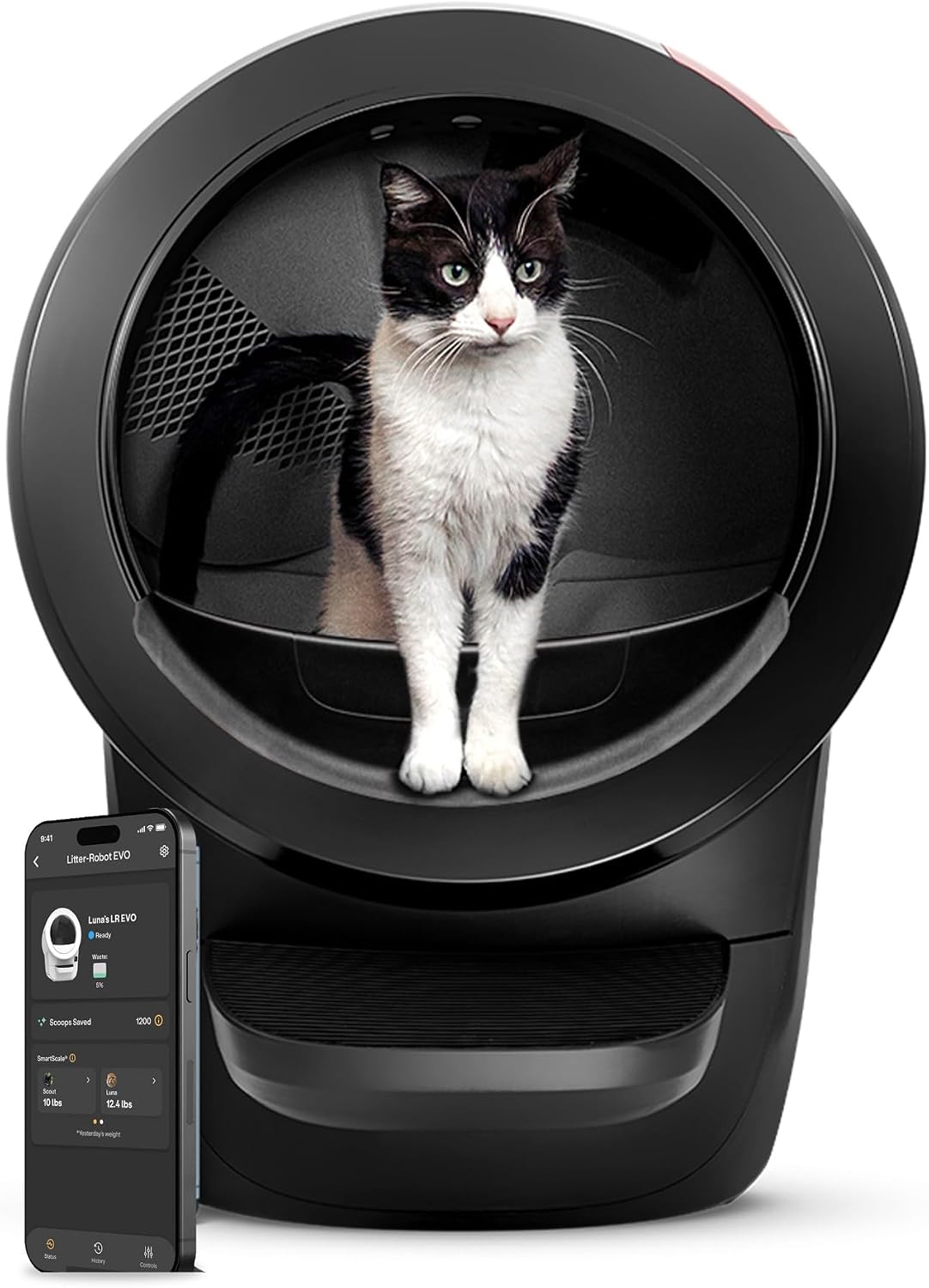
- Type
- Rotating drum, self-cleaning
- Waste capacity
- Up to 2 weeks (1 cat)
- App
- WiFi, litter level & usage tracking
- Price range
- $650–700
★ 4.4/5 from 37 verified Amazon reviews (plus thousands sold directly via Whisker). The Litter-Robot 4 is the gold standard of automatic litter boxes: a sealed waste drawer keeps odor inside, the app tracks your cat's weight and usage patterns, and the rotating drum sifts clumping litter automatically after every use. Owners consistently report it eliminates daily scooping entirely. The main drawbacks are the premium price and the ongoing cost of liners and carbon filters. The smaller review count on Amazon reflects that Whisker sells primarily through its own site – the model itself is the most-reviewed automatic litter box in the category overall.
- Pros
- Best-in-class odor control (sealed drawer)
- App tracks cat weight & litter usage
- Huge, established owner community
- 2-year warranty
- Cons
- Highest price in the category
- Ongoing cost: liners + carbon filters
- Needs ~30" x 30" floor space
Neakasa M1 Plus
Best Open-Top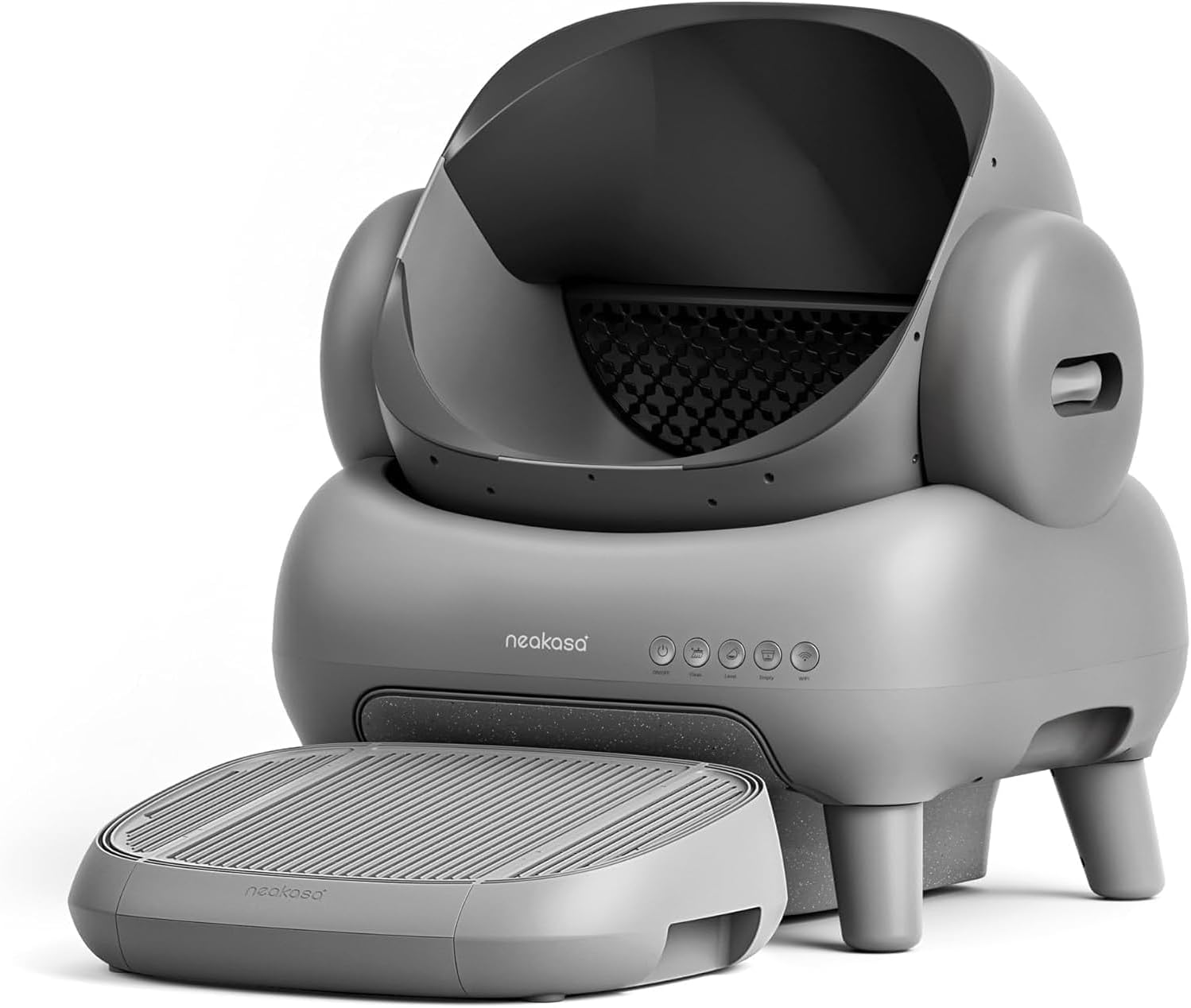
- Type
- Open-top sifting, self-cleaning
- Waste capacity
- ~1 week (1–2 cats)
- App
- WiFi, usage & litter alerts
- Price range
- $400–500
★ 4.4/5 from 4,296 verified Amazon reviews. The Neakasa M1 Plus is the best-value smart litter box on the market: an open-top design that most cats accept quickly, a quiet sifting mechanism, and app alerts when the waste bin is full. Unlike the Litter-Robot, it needs no proprietary liners – you use standard trash bags. Owners praise the price-to-performance ratio, though some report the waste bin needs emptying more often than advertised and the open design controls odor less effectively than sealed systems.
- Pros
- ~40% cheaper than Litter-Robot 4
- Open-top = high cat acceptance
- Standard bags, no proprietary liners
- Quiet sifting mechanism
- Cons
- Less effective odor control than sealed systems
- Waste bin fills faster than advertised
- App notifications can be delayed
Comparison Table
| Model | Price | Type | Running Cost/Year | Best for |
|---|---|---|---|---|
| Litter-Robot 4 | $650–700 | Rotating drum | ~$150–200 (liners + filters) | Best overall experience |
| Neakasa M1 Plus | $400–500 | Open-top sifting | ~$60–90 (standard bags) | Best value |
How to Choose: What Actually Matters
Total cost of ownership beats sticker price
The Litter-Robot's liners and filters are a real ongoing cost, while the Neakasa uses standard trash bags. Over 2–3 years, the Neakasa's lower running costs narrow the price gap significantly. Calculate total cost of ownership, not just the purchase price.
Odor control: sealed wins
If odor is your #1 concern, the Litter-Robot's sealed waste drawer is the winner – physics, not marketing. The Neakasa's open-top design smells a bit more but is easier for most cats to accept.
Cat acceptance is the real risk
An automatic box your cat refuses is a $700 paperweight. Open-top designs have the highest acceptance rates; rotating drums spook some cats at first. Most owners report a 1–2 week transition period with the old box left available.
Noise & placement
Both cycle briefly after each use; the Litter-Robot and Neakasa are both relatively quiet. Avoid placing either in a bedroom if you're a light sleeper.
FAQ
Are self-cleaning litter boxes safe for cats?
Yes, when used correctly. Both models have motion sensors that pause cycling when a cat enters. The Litter-Robot adds weight-sensor logic, and the Neakasa pauses on entry detection. Introduce gradually and keep the old box available during transition.
Which one is the quietest?
Both the Neakasa M1 Plus and the Litter-Robot 4 are relatively quiet during cycling. Neither is silent – expect a brief cycle noise after each use.
How often do I need to empty the waste?
Litter-Robot 4: roughly every 1–2 weeks per cat. Neakasa M1 Plus: about weekly for one cat.
Do they work with multiple cats?
Yes – both are marketed for multi-cat households. The Litter-Robot handles the highest volume; the Neakasa needs more frequent bin emptying with 2+ cats.
Bottom Line
The Litter-Robot 4 remains the best automatic litter box money can buy – if you can afford it. The Neakasa M1 Plus is the smart money pick: 80% of the experience at ~60% of the price, with lower running costs. Both are genuine automatic systems – you never touch a scoop again.
