Put an air purifier on the wrong side of the room and it will happily clean air the litter box never touched. An air purifier only treats the air that passes through it, so where you place it relative to the cat litter box matters as much as which model you buy. This guide covers the practical bits nobody puts on the box: how far from the box, where in the room, what height, and the dead spots to avoid. It applies to any True HEPA + carbon unit; if you have not chosen one yet, start with our guide to the best air purifiers for cat litter odor.
Everything here is based on how air purifiers are rated and how odor plumes behave in a room – manufacturer specifications and airflow fundamentals, not hands-on lab claims. The short version: put the purifier a few feet from the box, on the same side of the room, leave it running, and keep its intake clear.
Why placement matters so much
An air purifier is rated by how much clean air it delivers (its CADR) – but that number assumes the air actually reaches the unit. Odour from a litter box leaves the tray as a plume: warm, slightly buoyant gases (ammonia from urine, sulfur compounds from feces) that rise and spread into the room. If the purifier sits across the room in a corner, most of that plume has already dispersed before any of it is drawn in. Place the unit in the plume's path and it catches the smell near the source, while concentrations are highest and easiest to grab.
Two airflow effects are worth knowing:
- Source capture. The closer a purifier is to the emitter, the more of the odor it removes before it circulates through the room. Think of it like holding a range hood over a pan rather than across the kitchen.
- Short-circuiting. If the intake and exhaust are jammed against a wall or inside a cabinet, the unit just re-breathes its own output and room air never cycles. Clearance fixes this.
The 6 placement rules
- A few feet from the box, not touching it. Two to four feet is the sweet spot. Directly beside the box drags litter dust and stray spray into the intake and can spike the carbon load; too far and the plume has already spread.
- Same side of the room as the box. Even a couple of metres away on the box's side of the room outperforms a "better" spot on the opposite wall.
- Give the intake room to breathe. Leave at least 6 in (15 cm) of clear space – more at the front grille – so air can flow freely in and out. Do not slide it flush against a wall or sofa.
- Keep it out of a dead-end corner. Corners collect still air. A unit against a side wall, able to draw from open room air, circulates far better than one pinned in a three-sided nook.
- Dodge competing air currents. Keep the purifier away from air-conditioning vents, radiators, open windows and fans that blow the plume away from the intake – and away from the food and water station (cross-contamination and noise).
- Run it continuously. Odor control is about keeping concentrations down, not reacting after the smell builds. Auto mode makes 24/7 operation effortless and quiet.
How far is "a few feet"?
There is no single magic distance, because it depends on the room and the unit, but the working range is 2–4 ft (0.6–1.2 m):
- Closer than ~2 ft: litter dust, hair and the occasional enthusiastic dig get pulled straight into the pre-filter. In a multi-cat home that clogs the filter faster, and a curious cat may knock a small unit over. It also can make the unit read a spike and ramp up noisily.
- 2–4 ft: the plume is still concentrated but has smoothed out, so the unit captures odor without drowning in dust.
- Beyond ~4–6 ft in a large room: the smell has mixed into the general air. It still gets cleaned eventually, but the "I can smell it right at the box" problem lingers.
If you must choose, err slightly closer and rely on a washable pre-filter to catch the dust (see the litter box guide for keeping the box itself low-dust and low-odour).
Height, clearance and airflow
Most cat-household purifiers are floor units, and the floor is exactly where heavier particles and the coolest, densest part of the odor layer settle – so keeping the unit low generally helps. A few practical points:
- Floor or low table is fine; avoid high shelves where the intake sits above the plume and where the unit is harder to clean.
- Clear all four sides. Six inches minimum, and never tuck the exhaust into a curtain or under a shelf edge.
- Aim the exhaust away from the box if the unit is directional, so you are not blowing air across the litter and stirring up dust.
- Do not point the unit's own airflow at the cat's favorite path – a strong jet of air toward the box just resuspends dust.
Small rooms and bathrooms
In a small bathroom or utility room the rules relax: because the space is tiny, a right-sized unit can sit almost anywhere and still cycle the air many times an hour. The priorities shift to sizing (pick a unit whose coverage matches the room) and noise (a bathroom near a bedroom wants a sub-25 dB sleep mode). One compact unit on a modest speed will out-clean a large unit you have to switch off because it is too loud. Compact, quiet picks are rounded up in our guide to the best purifiers for cat allergies if dander is also a concern, and in the litter-odor roundup for odour specifically.
Where NOT to put a litter-box purifier
- Behind curtains, sofas or shelving – airflow is blocked and the unit overworks.
- Jammed into a dead-end corner – still air, poor circulation.
- Right against the box – dust and spray load the filter.
- Next to the food and water bowls – you do not want litter aerosol pulled toward where your cat eats, and the fan noise can put cats off eating.
- Inside a closed cabinet or cupboard – chokes the intake and wastes the unit entirely.
- In the direct line of a spray-prone cat – an unneutered male marks vertically; keep the intake out of the splash zone.
Multi-cat homes and multiple boxes
The rule of thumb from litter-box best practice – one box per cat plus one – creates a placement question. You do not need a purifier per box, but you do need to cover the box that actually smells. In practice:
- One purifier per room that contains a box, positioned near the highest-traffic box.
- Separate rooms get separate units – a single unit cannot clean across a closed door.
- Cover the whole room, not the whole home. A purifier is a room appliance; match each one to the room it serves.
Three purifiers that suit litter-box placement
Any True HEPA + carbon unit works with the rules above. These three are especially placement-friendly – compact footprints, washable pre-filters for dust, and quiet enough to leave running next to a box.
Coway AP-1512HH Mighty Air Purifier
Best All-Round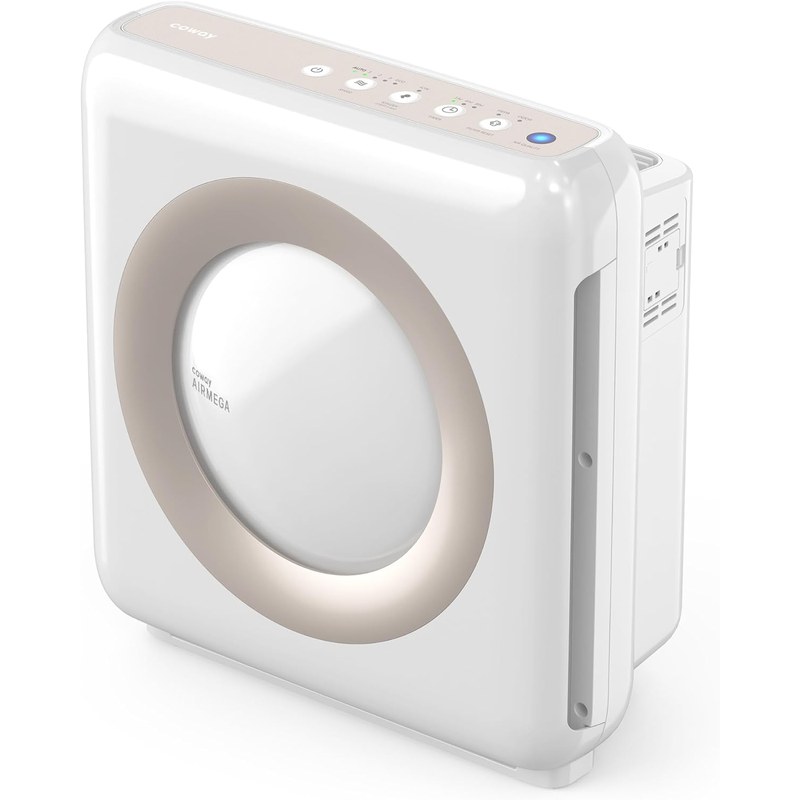
★ 4.6/5 from 29,186 verified Amazon reviews. A genuine carbon (deodorization) stage alongside True HEPA is what makes the Mighty an odor pick rather than a particle-only box, and its washable pre-filter is exactly what you want when the unit sits a few feet from a litter tray. Auto mode handles the 24/7 running, and the colour-coded air-quality light can be switched off at night.
- Pros
- True HEPA + a real carbon/deodorization stage
- AHAM-verified CADR 246
- Washable pre-filter handles litter dust
- 29,000+ reviews at 4.6 stars
- Cons
- No app or Wi-Fi
- Combined filter replaced as one unit
Blueair Blue Pure 511 Air Purifier
Best Compact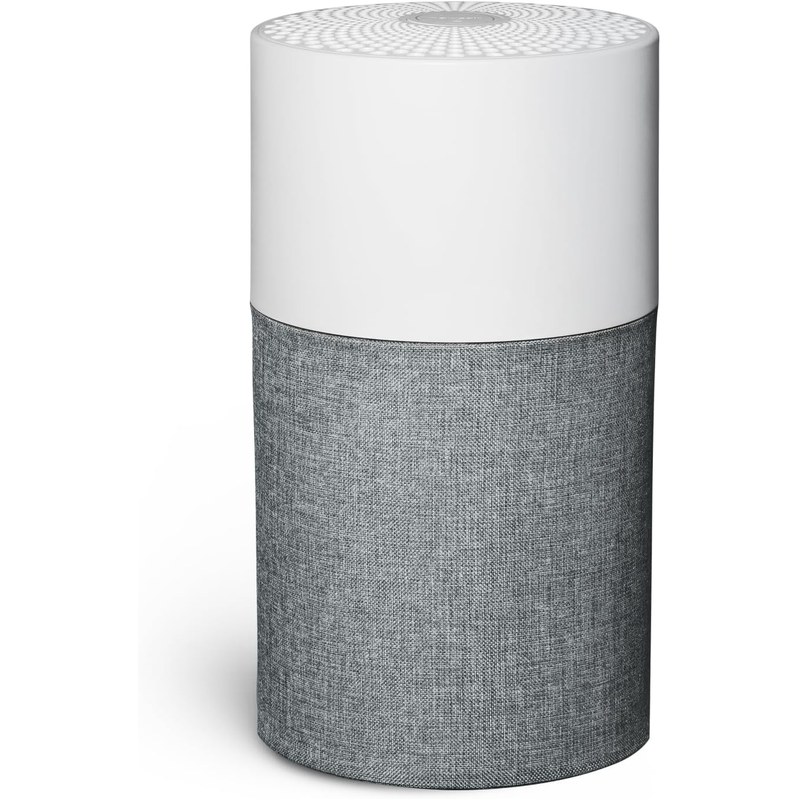
★ 4.4/5 from 3,371 verified Amazon reviews. If a full-size tower would dominate the litter corner, the 511 is the discreet answer: it cleans up to 432 sq ft in 30 minutes and runs at just 24 dB on low, so it can sit quietly a couple of feet away. The washable fabric pre-filter catches fur and litter dust before they reach the main filter, which matters when the unit lives near the box.
- Pros
- Compact and very quiet (24 dB low)
- Washable pre-filter for dust and fur
- HEPASilent 99.97% down to 0.1 microns
- Energy Star Most Efficient
- Cons
- One-room coverage only
- Lighter carbon layer for heavy odour
Levoit Core 300-P Air Purifier
Best Budget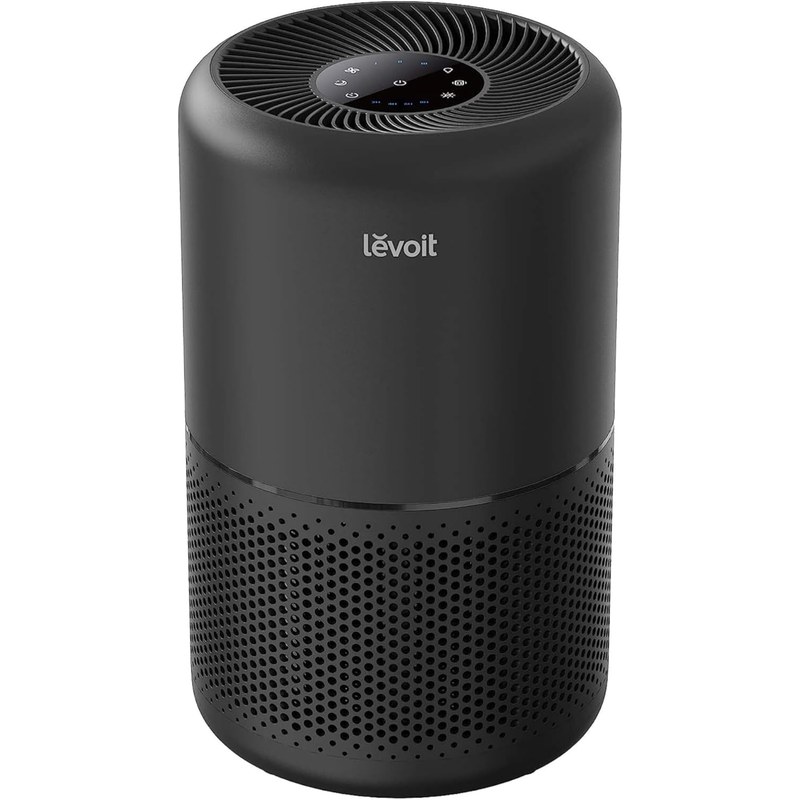
★ 4.7/5 from 108,978 verified Amazon reviews. The Core 300-P pairs a nylon pre-filter, activated carbon and HEPA-grade media in one inexpensive cartridge, with an optional Pet Allergy variant for odour and dander. Its 24 dB sleep mode lets it stay on beside a bathroom or utility-room box overnight, and the small footprint leaves the 2–4 ft placement window easy to hit.
- Pros
- 108,000+ reviews at 4.7 stars
- 24 dB sleep mode
- Swappable Pet Allergy filter option
- Low running cost
- Cons
- Best for one room
- No app on this version
Comparison: placement-friendly picks
| Model | Footprint | Pre-filter | Noise | Coverage | Rating |
|---|---|---|---|---|---|
| Coway AP-1512HH Mighty | Compact tower | Washable | — | up to 1,748 ft² | 4.6 (29,186) |
| Blueair Blue Pure 511 | Very compact | Washable fabric | 24 dB low | up to 907 ft² | 4.4 (3,371) |
| Levoit Core 300-P | Very compact | Nylon (in cartridge) | 24 dB sleep | up to 1,073 ft² | 4.7 (108,978) |
Coverage and noise figures are the manufacturers' published specifications; ratings and review counts are from Amazon. Prices change daily – use the links above for the current price.
Make the purifier's job easier
Placement is only half the equation. The less odour the litter itself releases, the less the purifier has to catch – and the longer its carbon lasts:
- Scoop daily and keep 2–3 in of litter in the box, per the cat litter box guide.
- Use a good clumping litter that locks odour in – see the best cat litter for odor control.
- Add a deodorizer for the gaps between scoops – the best cat litter deodorizers.
- Tackle dander too if allergies are in play – read do air purifiers help with cat dander?
FAQ
How far should an air purifier be from a cat litter box?
A few feet – roughly 2–4 ft (0.6–1.2 m). Close enough that the unit captures the odour plume near the source, far enough that it is not pulling litter dust and spray straight into the filter. Directly beside the box is too close; across a large room is too far.
Should I put the air purifier on the floor or on a table?
Floor level is usually best for a litter box, because heavier particles and the densest odour layer sit low. A low table is fine too, but avoid high shelves where the intake sits above the plume. Whichever you choose, leave at least 6 inches of clear space around the intake and exhaust.
Does the purifier need to face the litter box?
It does not need to point at the box, but it should sit on the same side of the room so the box's odour reaches its intake first. If the model is directional, aim the exhaust away from the litter so you are not blowing air across the tray and stirring up dust.
How many air purifiers do I need for multiple litter boxes?
One per room that contains a box, placed near the busiest box. A single unit cannot clean across a closed door, and a purifier is a room appliance – match each unit to the room it serves rather than trying to cover the whole home with one.
Should I leave a litter-box air purifier on all the time?
Yes. Odour control is about keeping concentrations low continuously, not blasting the air after the smell builds. Auto mode adjusts the fan as air quality changes, so the unit can run 24/7 quietly and efficiently.
Bottom Line
Placement is the cheapest upgrade you can make to litter-odor control. Put the purifier a few feet from the box, on the same side of the room, keep its intake clear of furniture and walls, aim its airflow away from the litter, and leave it running 24/7 on auto. In a small bathroom or utility room, sizing and quietness matter more than exact position.
A purifier placed well is doing less work than one fighting a plume that has already filled the room – so pair the position with daily scooping, an odor-control litter and a deodorizer, and revisit the model choice in our roundup of the best air purifiers for cat litter odor.